Class 7 MOT bay dimensions are a critical factor for anyone planning to build, upgrade, or convert a workshop for MOT testing in the UK. These dimensions determine whether a facility can safely accommodate light commercial vehicles up to 3,500kg while meeting strict DVSA approval standards. Without correct planning, even a well-equipped garage may fail inspection, resulting in delays, redesign costs, and lost business opportunities.


Understanding class 7 mot bay dimensions is not just about meeting minimum measurements, but also about ensuring safe and efficient workflow inside the workshop. Every aspect, including vehicle movement, equipment placement, and technician access, depends on these standards. A properly designed bay improves productivity, reduces operational risks, and ensures compliance with UK regulatory requirements for MOT testing stations.
DVSA and VOSA regulations for class 7 mot bay dimensions
The official standards governing class 7 mot bay dimensions are set by the DVSA, formerly known as VOSA. These regulations define how workshops must be designed to ensure safe and consistent vehicle testing across the UK. Although the term VOSA is outdated, it is still widely used in search queries and older technical documentation related to MOT bay planning.
Compliance with class 7 mot bay dimensions under DVSA rules is mandatory for approval as a testing station. Inspectors assess not only the size of the bay but also the overall suitability of the workshop layout. This includes safe access routes, proper headroom clearance, and sufficient operational space for equipment such as lifts, brake testers, and inspection tools.
Minimum class 7 mot bay dimensions and space requirements
The standard class 7 mot bay dimensions typically require a minimum length of around 10.6 to 11.5 metres and a width of at least 4.2 metres. These measurements ensure there is enough space for vehicle lifts, testing equipment, and safe technician movement. Headroom is equally important, with a recommended clearance of approximately 4.8 metres above the lift platform.
When planning class 7 mot bay dimensions, it is always advisable to exceed the minimum requirements wherever possible. Additional space improves workflow efficiency and reduces the risk of operational bottlenecks. Entrance and exit doors must also be sufficiently large, typically around 3.0 metres wide and 3.2 metres high, to accommodate commercial vehicles safely and comfortably.
Layout planning for efficient class 7 mot bay dimensions
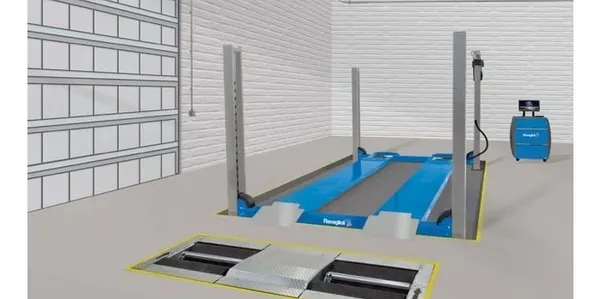
A well-designed layout is essential when working with class 7 mot bay dimensions, as it directly impacts productivity and safety. The positioning of equipment such as lifts, brake testers, and headlamp alignment zones must follow DVSA guidance. Proper spacing ensures vehicles can move smoothly through the testing process without obstruction or delay.
Effective use of class 7 mot bay dimensions also includes designing clear workflow paths within the workshop. Technicians must have unobstructed access to vehicles from all sides, and testing zones must be clearly separated. A poorly planned layout can lead to inefficiencies, increased risk of accidents, and failure to meet inspection standards during DVSA approval checks.
Brake testing and headlamp areas within class 7 mot bay dimensions
Specialised testing areas are a key component of class 7 mot bay dimensions, particularly brake testing and headlamp alignment zones. The brake test area typically requires a level surface measuring around 4.2 metres in width and up to 14 metres in length. This ensures accurate and consistent testing results for commercial vehicles.
Headlamp testing areas also play a crucial role in class 7 mot bay dimensions planning. These zones must be flat and precisely level to ensure correct beam alignment. Even minor surface variations can affect test accuracy, so careful construction and calibration are essential. Proper integration of these zones ensures full compliance with DVSA testing requirements.
Parking, access, and structural considerations
Parking and access design are essential elements of class 7 mot bay dimensions, especially for busy workshops handling multiple vehicles. Adequate off-road parking spaces are required to prevent congestion and allow smooth vehicle flow. Without proper parking planning, even a compliant bay can become operationally inefficient during peak hours.
Structural design also plays a major role in class 7 mot bay dimensions. Door height, width, and turning space must all be carefully considered to ensure safe entry and exit of vehicles. Workshops must be designed with sufficient clearance and reinforced flooring to support heavy commercial vehicles and testing equipment without compromising safety or performance.
Equipment installation and spatial planning
Equipment selection directly influences class 7 mot bay dimensions, as every installation requires specific clearance and operational space. Four-post lifts, inspection pits, and brake testers must be positioned according to DVSA guidelines. Incorrect spacing can interfere with testing procedures and may result in compliance failures during inspection visits.
Planning class 7 mot bay dimensions also involves considering long-term maintenance and usability of equipment. Adequate space around machinery allows technicians to carry out servicing, calibration, and repairs efficiently. This forward-thinking approach reduces downtime and ensures the workshop remains fully operational and compliant over time.
Common mistakes in class 7 mot bay dimensions planning
One of the most common mistakes in class 7 mot bay dimensions planning is underestimating headroom requirements. Many workshop owners focus on floor space but overlook vertical clearance needed for vehicle lifts. This often leads to costly structural modifications after inspection failure, delaying business operations significantly.
Another frequent issue with class 7 mot bay dimensions is poor workflow design. Without proper planning, vehicle movement can become restricted, reducing efficiency and increasing safety risks. It is essential to design layouts that balance minimum compliance standards with practical working conditions to ensure smooth daily operations and long-term reliability.
Class 7 MOT bay dimensions PDF and technical resources
Many professionals rely on class 7 mot bay dimensions PDF documents when planning workshop construction or upgrades. These technical resources provide detailed drawings, measurements, and layout examples that help visualise compliance requirements. They are especially useful for understanding equipment positioning and spatial relationships within the bay.
However, when using class 7 mot bay dimensions PDF guides, it is important to ensure they are based on up-to-date DVSA regulations. Outdated information can lead to incorrect planning and potential compliance failures. Cross-checking with official guidance or trusted equipment suppliers ensures accuracy and helps avoid costly mistakes during construction.
Conclusion
Class 7 mot bay dimensions are a fundamental requirement for any UK MOT testing station handling light commercial vehicles. From structural design to equipment layout, every detail must align with DVSA standards to ensure approval and operational efficiency. Proper planning is essential for long-term success and regulatory compliance.
Ultimately, class 7 mot bay dimensions should be viewed as both a technical specification and a practical design framework. By combining minimum requirements with efficient workflow planning, workshop owners can create safe, productive, and fully compliant MOT testing environments that support sustainable business growth in the automotive sector.